With the end of this year's primary election on the horizon, Democrats in the running for Michigan's 7th Congressional District are going all out to distinguish themselves in one of the most competitive races in the country. While the lone Republican on the ballot awaits his challenger, incumbent Rep. Tom Barrett is looking to find common ground with voters across the aisle.
WKAR's Andrew Roth breaks down what candidates have been up to and where they stand when it comes to policies, spending and government accountability.

Interview Transcript:
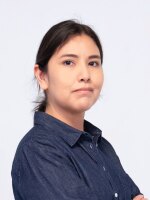
Melorie Begay: Michigan's 7th Congressional District Primary is set to be one of the most competitive races this election season. While incumbent U.S. Representative Tom Barrett remains the lone Republican on the ballot, three Democrats are going head-to-head to earn their spot in the general election. WKAR’s Andrew Roth joins me now to talk about the candidates. Thanks for being here, Andrew.
Andrew Roth: Thanks for having me.
Begay: So, Andrew, who are the Democrats running for this seat?
Roth: There are three Democrats competing in the primary right now. There's former Ambassador to Ukraine, Bridget Brink, and former Navy SEAL Matt Maasdam, and they're both sort of running in the mold of Elissa Slotkin, who held this seat before until she became Michigan's junior senator in 2024. But they both have that same type of military or national intelligence background. Then climate organizer William Lawrence is also running, and he's running in sort of the more progressive grassroots lane. The winner of that Democratic primary will go on to face the incumbent Republican Congressman Tom Barrett in November.
Begay: These candidates have been hitting the campaign trail, getting their message out to voters, and you even attended one of the forums with all three of these candidates. What have they been talking about?
Roth: I think the big themes are affordability and accountability. There's a lot of frustration among the candidates about the fact that the U.S. is involved in a new costly military conflict with Iran. While some leaders say other policy priorities, like expanding access to health care, would maybe be too expensive, and that conflict, in turn, also raises costs, right? You know, gas prices have gone up, some products face shipping issues.
But beyond the cost, the candidates also feel like the conflict in Iran is just one example of an administration that's been given a lot of leeway with little oversight from Congress. Maasdam says Congress needs to sort of reclaim and exert some of the power that it's ceded away by not using it.

Matt Maasdam: If Congress gives up all their power, gives up the power to declare war, gives up the power to have tariffs, gives up the power to control the purse strings, then it feels a lot like an authoritarian government. And so Congress, all by itself, just without even a bill, needs to stand up and, 'say no, no, no, that's our job.'
Roth: Brink also talks about how she fought corruption in other countries as a diplomat, and she's proposing various ethics reforms that would ban stock trading among all federal officials across the executive, legislative and judicial branches, institute gift limits, and possibly even introduce term limits on additional offices beyond the presidency. The candidates also all touched on electability, making the case for why they would be the strongest in a general election matchup with Congressman Barrett.
Begay: So, these candidates have some similarities in talking about affordability and accountability. I'm curious, how are these candidates setting themselves apart?
Roth: Well, I think all of the candidates are trying to draw a contrast between each other in the primary, certainly, but also even looking ahead to the general election in November.
Lawrence has made opposing data centers sort of a key focus of his campaign. He's calling for a statewide moratorium, and he actually made that the focus of his first TV ad. He's also been showing up at city council meetings and doing some ‘ask me anything’ type events outside Barrett's office. All of the candidates argue that Barrett hasn't been super accessible to constituents because he hasn't held an in-person town hall. He's opted instead to do telephone town halls and some private meetings with smaller groups of key stakeholders. Brink says serving under five presidents of both parties, she was considered sort of hawkish on foreign policy compared to a lot of Democrats.

Bridget Brink: And I had three, three questions for people, is it illegal, is it unethical, or is it immoral? And if the answers are no, no, no, then you do it, because we got to get things done.
Roth: She says she would bring that same leadership style to domestic policy and sort of take these bold swings.
Maasdam contends that part of how Barrett won last time was by leaning into his veteran status, he has the helicopters on his yard signs, he calls his supporters the Barrett Brigade, but Maasdam says that as a former Navy SEAL, he would nullify that as a strength and make the election about policy differences.
Begay: And we know the seventh congressional district is considered by many to be a toss-up. What else do we know about the district?
Roth: Yeah, so all three Democrats running for the seat, talked about how this is going to be a very close election— likely one of the closest House races in the country. This district includes very blue areas like MSU's campus and very red areas like Howell. Just in the past eight years, this seat has flipped from red to blue and back to red.
It's also expected to be one of the most expensive House races in the country. One candidate estimated that as much as $50 million could be poured into this race when all is said and done. That would be a little bit more expensive than it was in 2024, but with more competition for attention from the governor's race and Senate race, that's a believable estimate.
It's important to note, though, that a lot of that spending is coming from outside groups rather than from the campaigns directly. But, of course, the campaigns do need to fundraise as well, and this is something that came up. While Brink leads the three Democrats in both fundraising and cash on hand, Lawrence criticized some of his competition by saying that he has the most donors from within the district, and he's critical of Brink for accepting money from some out-of-state mega donors.

William Lawrence: Who you take money from is a big part of who you're accountable to. I mean, in your life, when your donor calls, you pick up—there's no way around that.
Roth: But Brink is critical of Maasdam for benefiting from ads purchased by some of those outside groups. And, ultimately, the three Democrats combined have less cash on hand than Barrett, who, of course, has the benefit of being an incumbent.
Begay: The winner of this race is, of course, going to face Barrett. A lot of the candidates talked about the Iran war, and he's one of the only members of Congress to vote to end the war in Iran, breaking with the rest of his party. What else has Barrett been up to?
Roth: Congressman Barrett has been hosting a number of Trump's cabinet secretaries in his district over the past month or so. So, you know, Health Secretary Robert Kennedy was in town, the Energy Secretary visited, the Housing Secretary was around. What's interesting is that Barrett actually also talked about the need to restore confidence in the government and other institutions, like we heard from some of the Democrats.

Tom Barrett: You know, we have a- an issue of trust right now, and that trust is, you know, something that has to be made up. People have a distrust of large institutions, they have a distrust of government, they have a distrust of utilities.
Roth: Like we talked about, this is one of the closest districts in the country, so it's maybe not entirely surprising that Barrett would sort of try to find some opportunities for common ground, but it'll be interesting to watch this race. The path to either party controlling Congress runs straight through Michigan.
Begay: All right, Andrew Roth is a reporter with WKAR. Thanks for being here, Andrew.
Roth: Thank you for having me.
This conversation has been edited for clarity and conciseness.