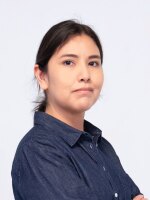
This week in mid-Michigan, Lansing officials hear an ordinance to bring city boards and commissions up to speed with current wards. Also, the first Farmers Market at the Capitol opens Tuesday, and it's the final full week before the August primary. These are some of the biggest stories WKAR's Andrew Roth is following on his weekly column What Roth's Watching. Andrew appears every Sunday in our newsletter The Signal.
From Andrew:
1. Lansing hearing on updating boards
Lansing City Council members will hold a public hearing on an ordinance to bring boards and commissions in line with the new city charter after it created an additional ward. Some boards and commissions follow the City Council’s ward structure, requiring members from each ward.
2. Farmers Market at the Capitol
The first Farmers Market at the Capitol of the year will take place Tuesday. The marketplace on the Michigan Capitol’s lawn brings together Michigan food and agricultural products in an effort to garner support for farmers and agriculture-based businesses. And, for an added treat, WKAR’s classical music team will be broadcasting live.
3. Closing pitches for campaigns
It’s the last full week for candidates up and down the ballot to get their message out, with many residents already voting. Democratic U.S. Senate candidates Haley Stevens and Abdul El-Sayed both campaigned in Lansing earlier this month, as did Republican gubernatorial candidate Perry Johnson. Which candidates will try to fit one more visit to the area before the August 4 primary remains to be seen.

Interview Transcript:
Melorie Begay: This week in mid-Michigan, Lansing City Council members are holding a public hearing on how to bring boards and commissions in line with the new charter after it created an additional ward. Also, the first Farmers Market at the Capitol opens Tuesday, and it's the final full week before the August primary. These are some of the biggest stories we're tracking this week, and here to break it all down is Andrew Roth.
He writes a weekly column in our newsletter, The Signal, What Roth's Watching out every Sunday. Thanks for being here, Andrew.
Andrew Roth: Thank you for having me.
Begay: Last November, Lansing voted to approve a new charter, which is the city's governing document, and most of the changes were minor, but one big change to come out of it was the addition of a new ward. That new ward means there has to be some alterations to bring it in line with others. Andrew, what is the city proposing to help make that happen?
Roth: That's right. Under the new charter, Lansing City Council goes from four wards and eight total seats to five wards and nine total seats, which is helpful for the possibility of needing, potentially, a tiebreaker at some point. But that also means that some boards and commissions that follow the same ward structure are going to have to be updated to accommodate for that additional ward. Basically, meaning that there's another area of the city that there's going to have to be a representative from, and what the boundaries of that ward are.
Begay: And do we have a timeline of when this all could go into effect?
Roth: Yeah, for City Council members, this is all going to be changing during 2029 and be fully into effect by 2030. So the new boundaries will be proposed in 2029, and elections will be run and everything. Then the new city council members with those new boundaries will take their seats in 2030.
Begay: On Tuesday, the Farmers Market at the Capitol will open for the first time this year. What makes this farmers market different from others?
Roth: This farmers market at the Capitol, it happens a few times throughout the summer and early fall, and it's meant to bring together food and agricultural products and vendors. The idea is to educate lawmakers about the importance of these agricultural businesses. But if you've been to a farmers market, there's food trucks out there, there's all kinds of different vendors. One of my favorites, personally, in the past has been a place that makes homemade donuts right in the food truck, and you can actually watch them doing it. It's a little bit early seasonally, it's not fall yet, but always happy to get a sweet treat. So that's one of my favorites, personally.
Begay: Yeah, and also WKAR's Classical Music team will be there, Jody Knol and Linda Kernohan, and also our Director of Education Robin Pizzo. So if you see them, say hi.
But, getting to probably one of the biggest stories this week, it's the final week before Election Day which means campaigns for some of the most competitive races, including the U.S. Senate and Congressional Democratic primaries and the Republican gubernatorial primary race will be kicking their efforts into high gear. Andrew, what do you think about this final stretch?
Roth: Yeah, well, both the Democratic Senate primary and the Republican gubernatorial primary are down to head-to-head races at this point. And we've seen both of the Democratic Senate candidates in Lansing in the past couple weeks; Haley Stevens visited a couple local businesses in Lansing, Abdul El-Sayed had a big rally with Bernie Sanders. On the Republican gubernatorial side, Perry Johnson was in Lansing a couple days ago. And so, I'm really expecting these candidates to kind of hit the ground hard and try to get out that last push to get out the vote.
Begay: Andrew Roth is a reporter with WKAR. Thanks for being here, Andrew.
Roth: Always a joy.
This conversation has been edited for clarity and conciseness.