

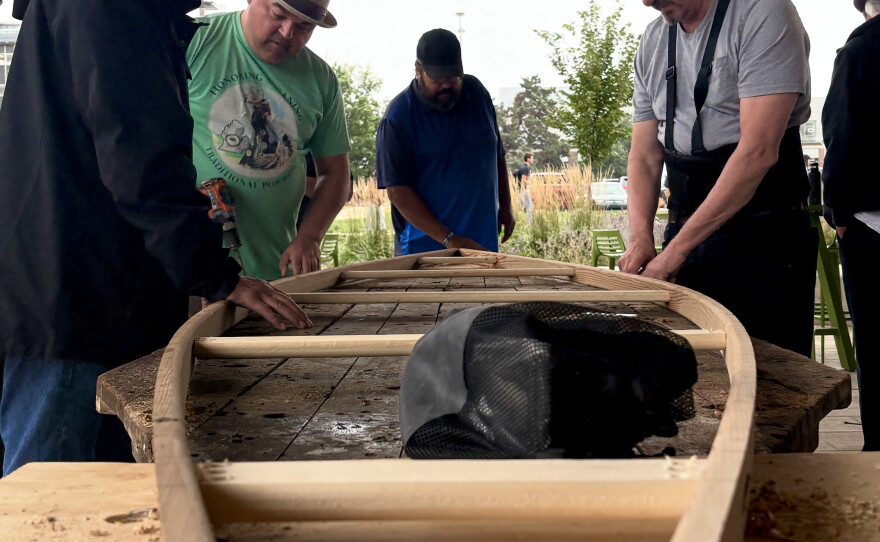
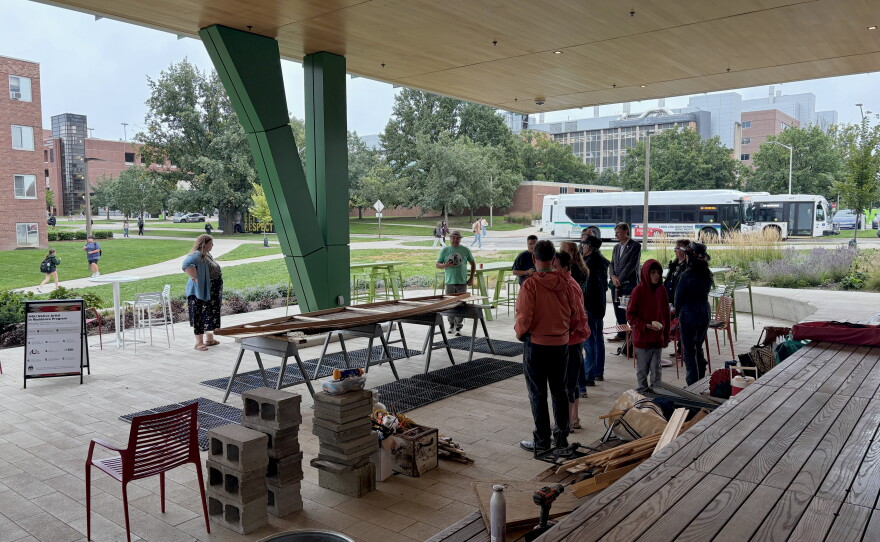
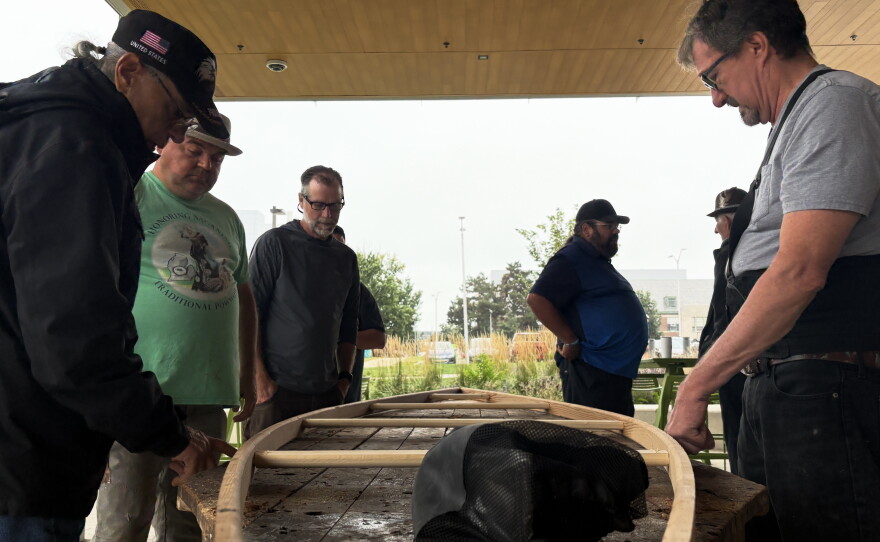
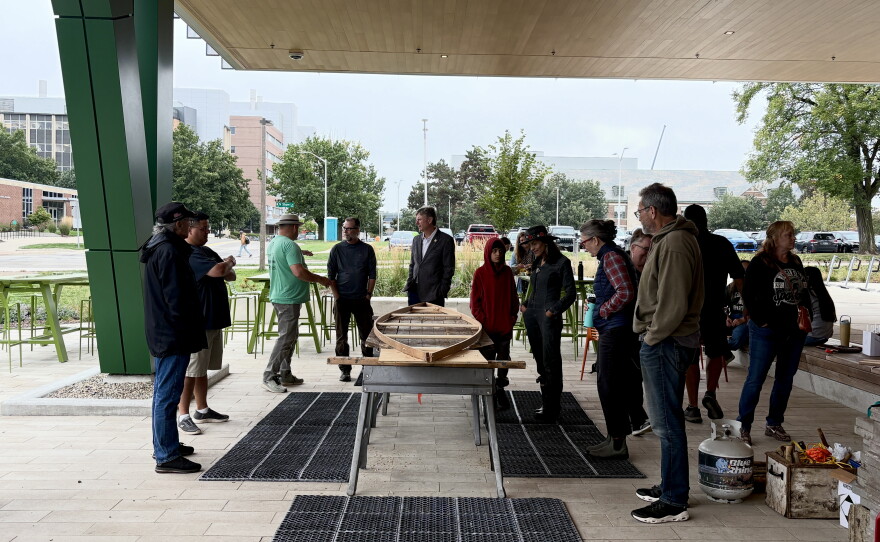
At 83, Ron Paquin stood inside Michigan State University’s Multicultural Center watching his birch bark canoe begin to take shape. Paquin is a self-taught birch bark canoe builder from St. Ignace.
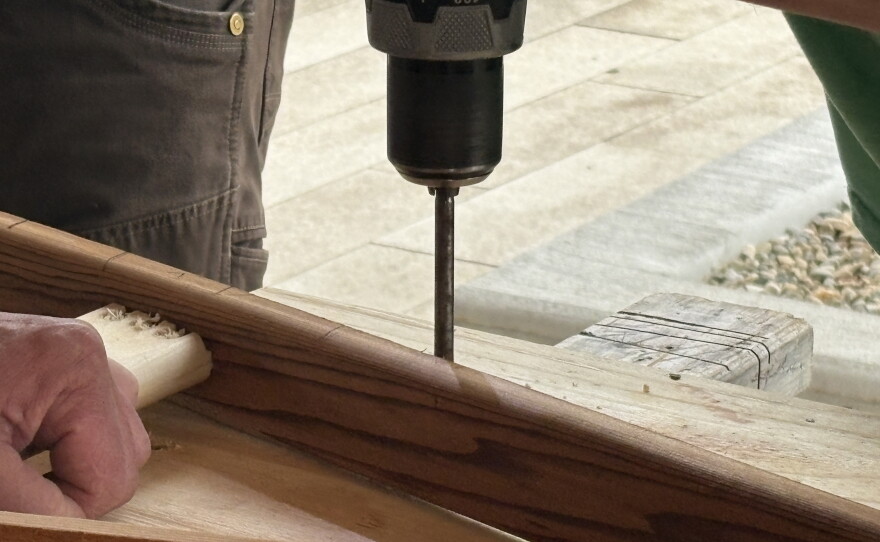
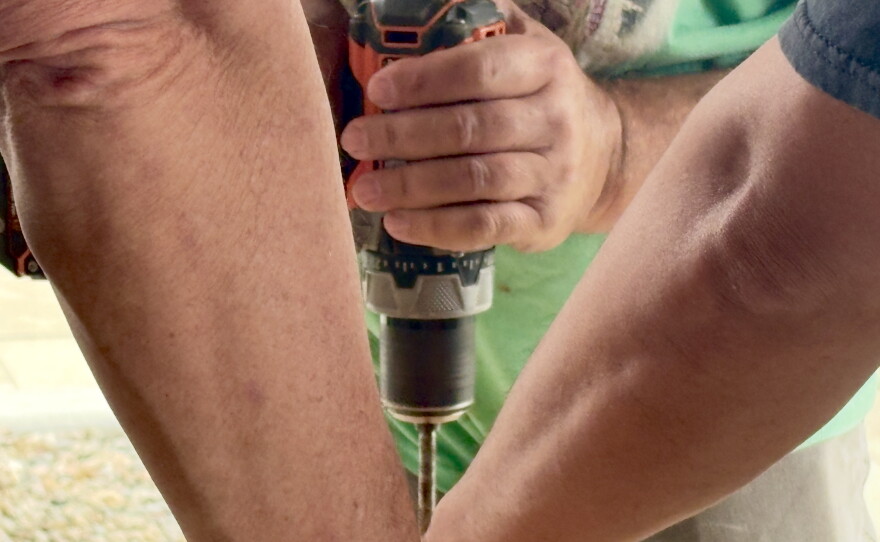
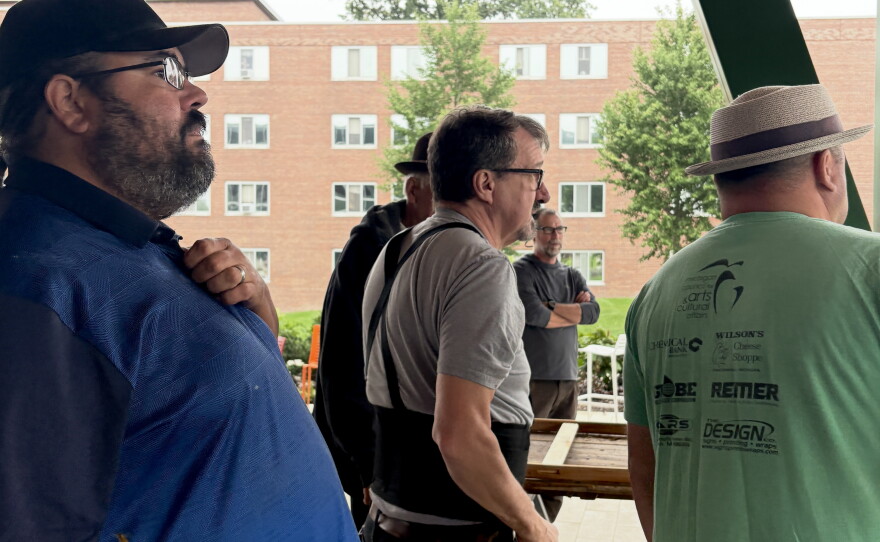
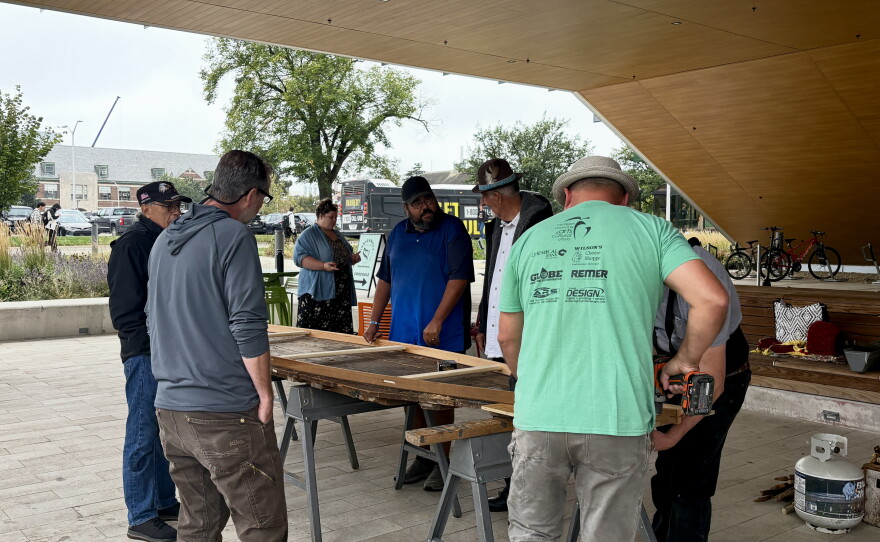
Around him, volunteers and apprentices moved through the space, sipping coffee and chatting. Dust rose as holes were drilled into the canoe frame. Paquin, wearing a bowler hat, watched the work and talked with the people gathered around him.
The self-taught canoe builder traveled from St. Ignace to East Lansing as part of MSU’s Indigenous Welcome Celebration, hosted by MSU’s Native American Institute. The welcome celebration was held Wednesday, Sept. 16. Students, faculty and community members are invited to help with the canoe build Saturday from 10 a.m. to 4 p.m. and Sunday from 10 a.m. to 1 p.m.
Paquin has built 83 canoes. The one taking shape at Michigan State University will be his 84th.
In high school, Paquin was an athlete who played almost every sport. After high school, he said he realized academics were not his strength.
“So I had to figure out how to make a living, you know?” Paquin said. “I went into block laying and cement finishing and all that; it didn’t take schoolwork to know that.”
He later landed a job at a museum.
“I was working at the museum at [St. Ignace], and they wanted me to do a project, and someone mentioned birch bark canoes; I figured it all out,” Paquin said.
“Nobody knew!” Paquin exclaimed.
He began figuring out the process himself, working with birch bark, spruce roots and other natural materials.
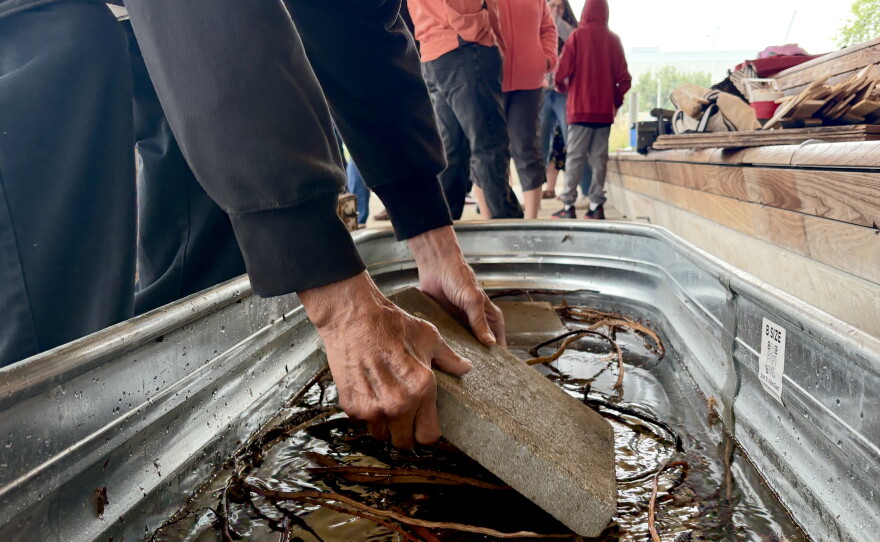
Before construction, the birch bark and spruce roots are soaked in water. Soaking makes the birch bark more pliable, while the spruce roots are soaked so their outer bark can be removed.
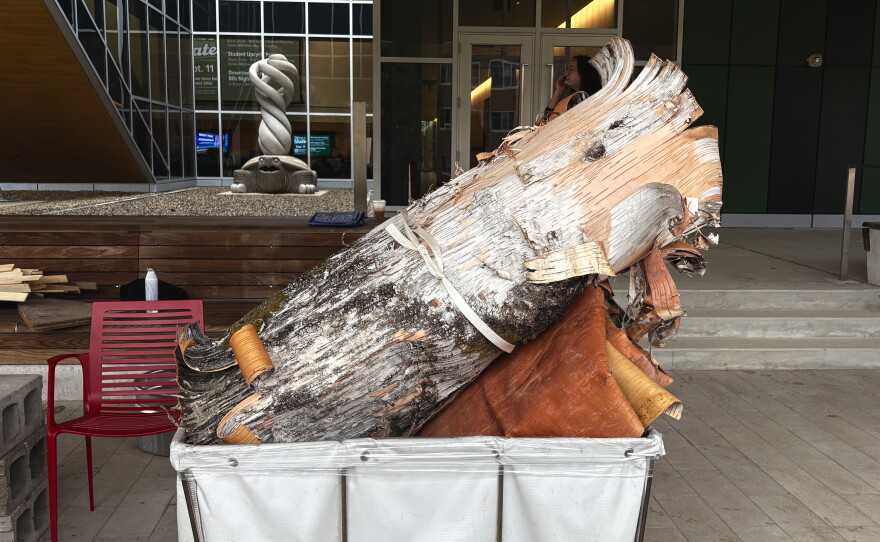
“There’s only a certain time of year you can get the bark off the tree,” Paquin said.
Spring is the best time to gather it, he said. Paquin collects the materials used in his canoes himself.
At MSU, volunteers carried water to a basin filled with spruce roots. Paquin placed a stone into the water to help keep the materials submerged.
His wife, Molly Paquin, walked over carrying two cups of coffee, one for herself and one for him. Paquin took the cup and wrapped an arm around her.
Paquin has also built two 22-foot-long canoes. According to an article by Cory Marie Podielski and Micah Ling, one was built in 2010 to transport the remains of six Indigenous ancestors from the Smithsonian back to Batchewana First Nation in Ontario. Paquin said another was built for a museum.
For Paquin, the MSU build is another chance to share his craft. After building 83 canoes, he said his favorite part of the process is seeing the finished canoe.