With two big victories in mid-Michigan, progressive candidates Abdul El-Sayed and William Lawrence will now turn their focus to the November election.
As WKAR's lead politics reporter Andrew Roth explains, Democrats will need to coalesce around the two candidates if they want to defeat the GOP this fall.
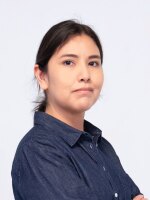
Andrew stopped by Morning Edition with WKAR's Melorie Begay to break down what's next as the general election takes shape.

Interview Transcript:
Melorie Begay: The Associated Press has called Michigan's Democratic primary for the U.S. Senate for Abdul El-Sayed.
For much of the night, NBC News was the only major news organization projecting El-Sayed as the winner, while the Associated Press continued to monitor the results. El-Sayed's victory marks a major win for Michigan progressives.
Joining us now to break down the race and what it means for November is WKAR lead politics reporter Andrew Roth. Andrew, you've been up all night, so thank you so much for being here.
Andrew Roth: Thank you for having me.
Begay: You were at Abdul El-Sayed's election night watch party. At that point, the race had not yet been called, but what was the mood like in the room?
Roth: Supporters were really optimistic right up until the end. They had to send people home before the race was officially called, like you mentioned. Abdul El-Sayed took the stage around 1 a.m. and spoke to supporters.
I've been to some of these watch parties in the past where they don't necessarily have a final race call before the end of the night. Maybe the amount of time that they have the event space rented out for is coming to an end, or the audience is starting to thin out as it gets later, so they sometimes have to send people home early before there's an official result.
But a lot of times this happens when things have not necessarily been going their way at the watch parties I've been at. For example, in 2024, I was at a watch party Michigan Democrats had, and people were scared of the election result and unhappy with the way things were going for them, even though it hadn't been officially called. But in this case, a lot of the voters there were pretty confident that their preferred candidate would in fact take the win.
Begay: Now that El-Sayed is the Democratic nominee, how does he shift from a competitive primary to a general election campaign against Republican Mike Rogers. Andrew, what will be his biggest challenge?
Roth: I think the first thing is really kind of getting the Democratic base to coalesce around him as the nominee, and we've already seen that starting to happen a little bit, or efforts for that at least.
State Sen. Mallory McMorrow, who suspended her own campaign for U.S. Senate, has endorsed Abdul El-Sayed. She originally intended to attend the watch party of whichever candidate won; Congresswoman Haley Stevens had her watch party just about a mile and a half down the road, actually. But of course, because there wasn't an official result yet by the time both candidates spoke, she had to do that just by posting on social media.
But I think the focus is going to be on getting the rest of the Democratic base to coalesce around him after what was a really tough, divisive primary.
Begay: Progressive William Lawrence also won the Democratic nomination for Michigan's 7th congressional district. What drove his victory, and what kind of race will he face against Republican Tom Barrett?
Roth: Yeah, so there are a couple factors at play here. For one thing, William Lawrence had a really strong ground game — he had a lot of volunteers out knocking on doors, he went to a lot of events — and that can't be discounted. But the other thing is that the two more moderate candidates in the race, former ambassador to Ukraine Bridget Brink and former Navy SEAL Matt Maasdam, they really did sort of split the moderate vote, which is what a lot of Democratic strategists were concerned might happen, and that does seem to be the case.
They both earned a decent chunk of votes that if there were only one moderate in the race and it were a head-to-head matchup, the result may have been different. But the other thing that's interesting is that some of these down-ticket progressives, like Lawrence, really sort of benefited from campaigning with Abdul El-Sayed as the statewide candidate, and actually at El-Sayed's watch party in Detroit, there was some chants of "We Will, We Will," which was a reference to Lawrence's campaign. So, there is a lot of enthusiasm and solidarity among progressive candidates throughout the state right now.
Begay: Now, looking beyond these two contests, which other results from last night stood out to you, and what do they tell us about Michigan's political landscape heading into November?
Roth: The frontrunners for both the Republican and Democratic primaries for governor did, in fact, win their races and quite a bit earlier than the U.S. Senate race was called.
But the more interesting race is probably the Republican one, where Congressman John James did in fact win against businessman Perry Johnson. James had earned the endorsement of President Donald Trump, but Johnson was spending millions of dollars on TV ads. He was still making in-person campaign appearances right up until the finish line, and so I think that this shows that President Trump's endorsement does in fact still hold a lot of weight for a lot of Republicans in Michigan.
Begay: Andrew Roth is WKAR's lead politics reporter. Thanks for being here, Andrew.
Roth: Happy to be here.
This conversation has been edited for clarity and conciseness.