

While walking down grocery store aisles across the country, shoppers will find boxes of cereal like Rice Krispies, Corn Flakes and Honey Bunches of Oats dotting the shelves.
For generations, Battle Creek helped feed America. The Michigan city became known as the "Cereal Capital of the World," home to breakfast brands that filled pantry shelves from coast to coast.
Battle Creek earned its “Cereal City” moniker because of Kellogg’s and Post, two major cereal producing companies which began their operations in Battle Creek during the late 1800s.
Cereal's Michigan beginnings
During the end of the 19th century, Battle Creek residents, William Keith Kellogg and his brother John, managed the Battle Creek Sanitarium. There, the two worked to create healthy breakfast foods for their patients, said Jody Owens, volunteer at the Historical Society of Battle Creek.
In 1898, the brothers accidentally flaked wheat berries while attempting to make granola, and W.K. then experimented until he flaked corn, creating cornflakes.
Around that same time, a man by the name of Charles William Post visited the sanitarium as an ill patient, Owens said.
"He sort of turned out to be a snake in the grass because all of the time that he was there, he was kind of snooping around here and snooping around there looking at the things that they were doing," she said.

Post started his own cereal company in 1895, but several of his recipes are said to be inspired by or even stolen from Kellogg's, Owens said.
In 1906, W.K. Kellogg started the Battle Creek Toasted Corn Flake Company and began selling cereal. The two brothers fought over the question of putting sugar in the cereal, with W.K. vouching for its addition while John was adamantly opposed, she said.
"That was enough for the two brothers to have a falling out that was never resolved," she said. "They both died and both are buried in the same cemetery, but they never had anything to do with each other again."
During the early 20th century, other people from around the country raced to Battle Creek to start their own cereal businesses, the overwhelming majority being unsuccessful.
"All these people thought that if they came to Battle Creek they could start a cereal factory and make as much money as those two men," Owens said. "And so at one time, there were like 100 cereal companies in name in Battle Creek."


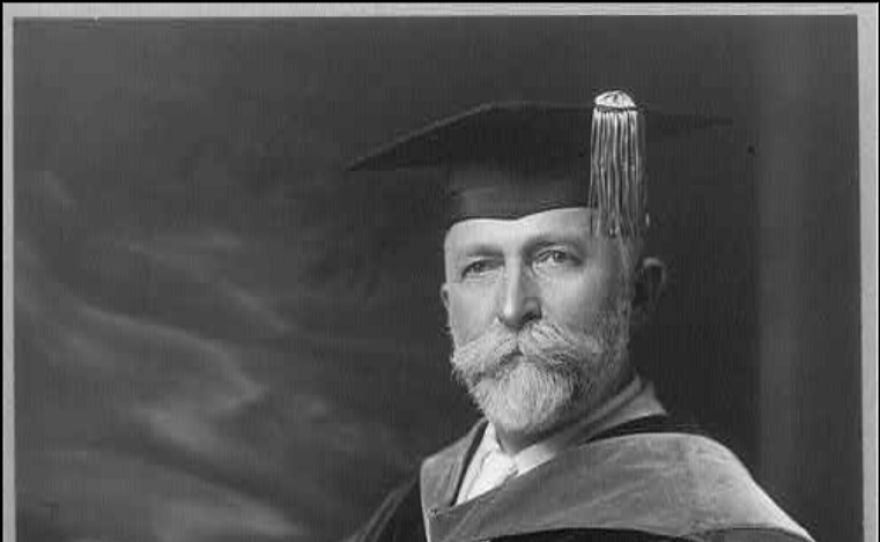

W.K. Kellogg's footprint on the community was larger than cereal. He pioneered health care and education innovation in the city, including building the first school for special needs children, named after his mother Anne. J Kellogg, and an "open air school" that kept the windows open all year round, Owens said.
Multiple buildings are named after Kellogg in the community today, like the airport, community college, and entertainment arena in downtown Battle Creek.
Kellogg's influence expands beyond the community's borders. There are at least 12 schools in the state with his namesake in addition to institutions like the Kellogg Hotel and Conference Center in East Lansing, and Michigan State University's Kellogg Biological Station.
The Kellogg’s are even infamous for their alleged introduction of black squirrels to Michigan, although this is somewhat of a myth, given black squirrels are indeed native to the state. (Black squirrels are a color variant of the Eastern Gray Squirrel.) John Harvey Kellogg did introduce populations to Battle Creek, infusing the area with them.
Battle Creek's cereal boom and bust
During the middle half of the 20th century, Battle Creek’s factories were alive with cereal production, shipping boxes to cities across the nation through the nearby railways. People visited the factories to watch its production and you could smell cereal in the air.
Owens herself worked in Kellogg's cereal factory during the summers of 1965 to 1969 and said it was a great place to work.
One day, she and other workers heard rumors that production would be moving internationally where it would be cheaper.

"The Foremen are telling all of us 'oh no no no that's just a rumor, just ignore it,' you know, 'it's not going to happen.' Out in the parking lot where all of us parked, here's all these huge boxes with different kinds of cereal manufacturing machines that were stamped to go to Mexico," she said.
Production did indeed shift internationally not too soon afterwards and over 1,700 workers lost their jobs.
Owens said people tried to find work at other factories nearby, but it wasn’t the same. Families moved away and businesses left the city.
Battle Creek today
Owens said the Kellogg's company of today is nothing like the Kellogg’s of the past.
"His motto was, 'as for me, I'll invest in people,' and that's what he did," Owens said. "And that's a joke anymore about the Kellogg company. They don't care about people, they care about the bottom line."
The company split into three businesses, and shifted the production of its snack products, which accounted for 80% of Kellogg’s revenue, to Chicago back in 2022.
In 2025, Kellogg's was purchased by Ferrero, an Italian company.
Owens said the "cereal city" namesake is a reference to a bygone era.
"When they say that now they're looking back at a time when it really was, because it certainly isn't anymore," Owens said. "This is speaking for myself, but I think I speak for other people as well, it's just been a disappointment."

In the 1990s, Battle Creek opened up a museum that showed guests the cereal making process, but it ultimately closed because not enough people visited.
"It was a Kellogg brain child and it was a beautiful museum and they had variety of exhibits," she said. "The trouble is when you're dealing with 'how do you make cereal?', you can't keep changing the exhibits because you just make them the same way."
Battle Creek does continue to recognize their community's history through an annual "National Cereal Festival," which was held on June 13-14 this year.
Kaycie Chrystan, marketing and box office coordinator at Kellogg Arena, said the festival started in 1956.
"Basically, that was right when we were in the middle of the hustle and bustle of the cereal distribution and having both Kellogg's and Post right here in Battle Creek and downtown," she said.
Chrystan said the festival brings in thousands of people each year and free cereal is provided by Kellogg's and Post. Every year the festival grows by around 700-1,000 people.
This year the festival had plenty of live entertainment, including exotic animals, mini-golf, bounce houses and three music acts, she said.
Historically, the festival boasted "the world's longest breakfast table," composed up of the city's picnic tables, that stretches for blocks and closes streets downtown, she said.
These days, the breakfast tables have small spaces between them so people can navigate through the festival more easily.
Chrystan said it's important that Battle Creek continues to recognize what W.K. did for the community and the festival is a great way to do so.
"W.K. Kellogg worked so hard to get Battle Creek on the map and be able to provide nutrition and health care through the sanitarium way back in the day," she said. "We feel that it is definitely our responsibility to honor that heritage and honor all of the hard work that was put into really getting Battle Creek up and running."
Owens said Kellogg's name is kept alive through the W.K. Kellogg foundation, which he founded later in his life.
The foundation funds education scholarship, childcare, public health and more. Volunteers work throughout the state of Michigan, the United States and other countries.
"He would be sad about what's happened to the factory and the people who work directly for him, but he sure wouldn't be sad about what the foundation has always done and continues to do," she said.


