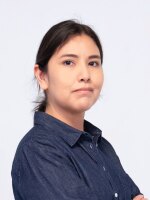
After Secretary of State Jocelyn Benson selected state Sen. Winnie Brinks as her running mate this week, both the Republican and Democratic gubernatorial nominees now have their lieutenant governors.
Brinks and John James' pick, state Rep. Jay DeBoyer, will receive official approval during their respective parties' nominating conventions. Republicans will meet this weekend, and Democrats will meet next Saturday.
As the November ballot continues to evolve, a petition campaign that would tighten voter ID and registration laws faces hurdles and may not be brought before voters this year.
These are some of the biggest election developments that happened this week. WKAR Capitol Correspondent Colin Jackson joined WKAR Morning Edition host Melorie Begay to break it all down. Click on the audio player above to listen.

Interview Transcript:
Melorie Begay: Michigan voters are getting a better sense of who they'll see on the statewide ballot this fall. This week, Democratic nominee Jocelyn Benson named state Sen. Winnie Brinks as her running mate, while a petition to tighten voter ID and registration requirements continues to face hurdles. Joining me now is WKAR Capitol Correspondent Colin Jackson, thanks for being here, Colin.
Colin Jackson: Thanks for having me.
Begay: You were in Grand Rapids this week to cover Secretary of State Jocelyn Benson's selection of state Sen. Winnie Brinks as her running mate. She was one of the three you mentioned Benson had in the mix for the position. What do you think set Brinks apart from others?
Jackson: Sen. Brinks has a lot of legislative experience, and I think that's something that is going to benefit the Benson ticket, especially as they move toward the November general election. Besides her having a lot of general experience, I think genuinely they do just get along. I think they have similar approaches to governing in a very practical manner.

Besides that, Winnie Brinks is from Grand Rapids. I think in an election where there's debate back and forth as to whether regional affiliations really matter, you know, Benson lives in Detroit, John James is from southeast Michigan, his running mate is from southeast Michigan, I think having someone from Grand Rapids to set the Democratic ticket apart also doesn't hurt.
Begay: Now that the ballot is a little bit more solidified, right? We have John James running with Jay DeBoyer and Jocelyn Benson with Winnie Brinks. What's next in terms of solidifying this ballot?
Jackson: Yeah, so, you know we have these big announcements. These campaigns did these big rollouts, which is great for them when it comes to building momentum.
The official lieutenant governor selection will take place at upcoming Republican and Democratic conventions. Republicans are meeting this weekend in Mount Pleasant, where they'll officially solidify not just the lieutenant governor pick, but some of those convention nominations we heard about earlier in this year. We treated those as if they were official because were more or less official, but technically, under Michigan law, those will become official this month at this convention. The same thing is true for the Democratic ticket, they're meeting in Lansing in a couple of weekends, and something similar will happen.
Begay: While we're on the topic of solidifying what voters will see in November, there was another update this week on a petition campaign to tighten Michigan's voter ID and registration laws. Colin, for people who may not have been following this, can you give us some background?
Jackson: This is a proposed constitutional amendment. Some people have compared it to a Michigan version of the Federal SAVE Act that you may have heard of. Some of the things it would do include requiring a photo ID at the polls, no matter what. Under state law, if you leave your wallet at home, you can sign an affidavit. Now, that's a legal document still under the threat of perjury, saying that you are who you are, you can still cast a ballot.
If this proposal goes through, you would no longer have that option. Instead, you would cast a provisional ballot, which would only be counted if you come back to show your ID at some point within the next six days of the election.
Another thing is right now when you register to vote in Michigan, you can register online. It's pretty easy to register to vote. There's a box you have to check that says you are a citizen of the United States and an eligible voter of Michigan, but you don't necessarily need to upload a photo of your passport or Real ID or something like that.
That's something supporters of this measure say they really want to change. You would need to show some sort of proof of citizenship to register to vote, not just, again, under the threat of perjury, attest that you're a citizen. That's what this would do.
Begay: And this week we learned that it may not appear on the November ballot. Where does it stand now?
Jackson: Where it stands now is they submitted over 700,000 signatures to get on the ballot. That's far more than the signature threshold, but elections officials, they don't look at all 700,000 signatures. They look at a sample of that and determine, based on how many turned in, what percentage of the sample needs to be valid.
This week, election officials found not enough of those signatures in the sample were valid. So, there is another state elections board meeting coming up next week where the Americans for Citizen Voting campaign is going to contest that decision, and the state elections board will get final say. But it's important to remember, no matter what happens, this will probably end up in court.
Begay: All right, Colin Jackson is WKAR's Capitol Correspondent. Thanks for being here, Colin.
Jackson: Thanks, Melorie.
Begay: Stay on top of the political stories shaping Michigan with WKAR News. The Signal includes a Sunday week-ahead and a Wednesday midweek update featuring reporting and analysis from WKAR News Politics Reporter Andrew Roth and Colin, who's a member of our Capitol team. Both are free. Sign up and visit our Election 2026 page at wkar.org.
This interview has been edited for clarity and conciseness.