
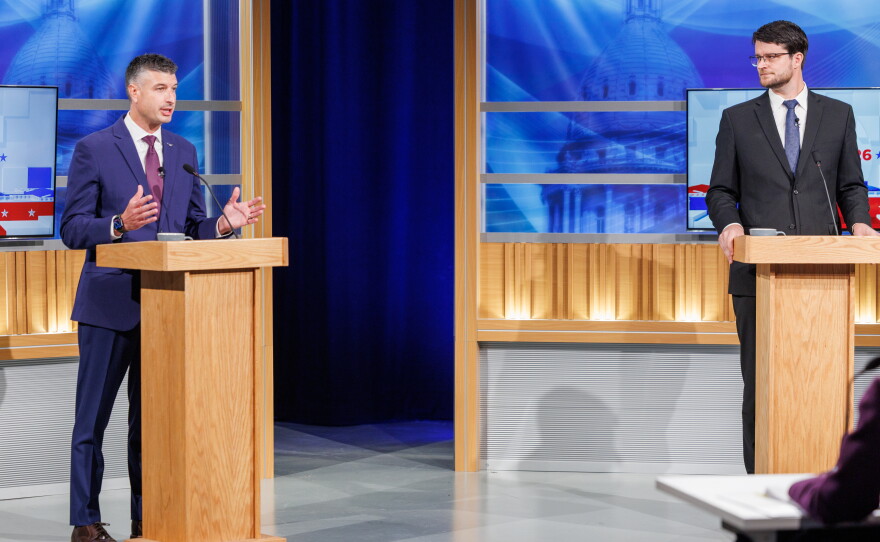
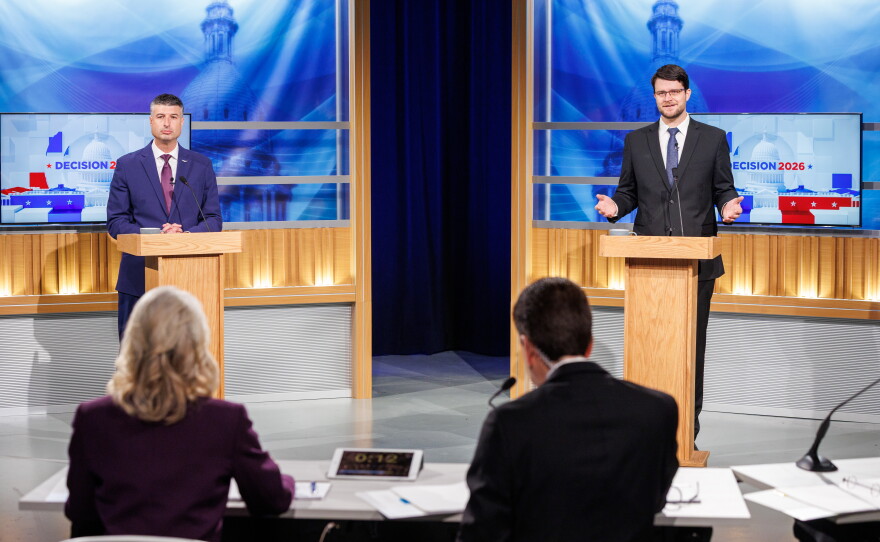
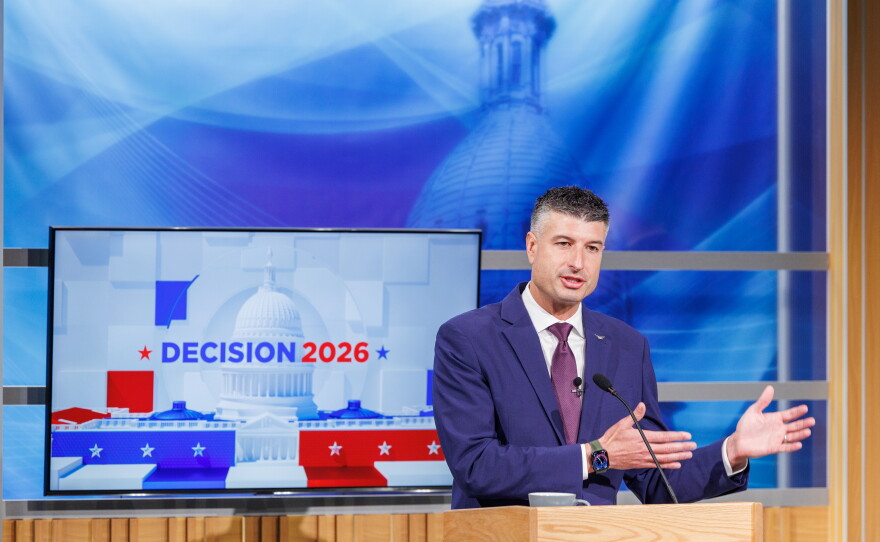
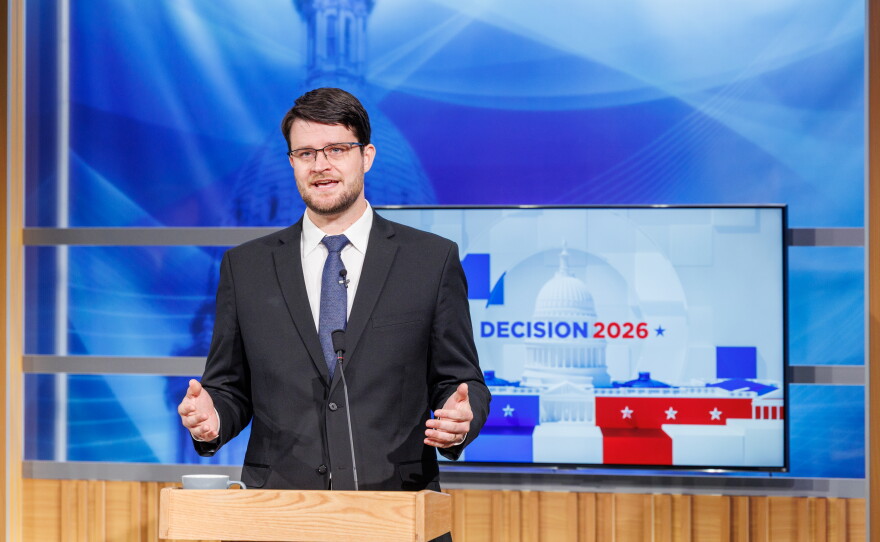
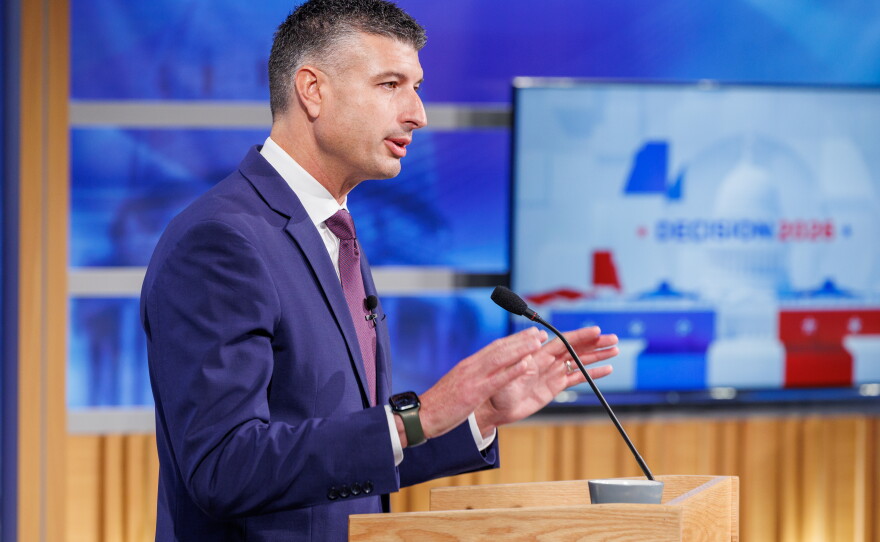
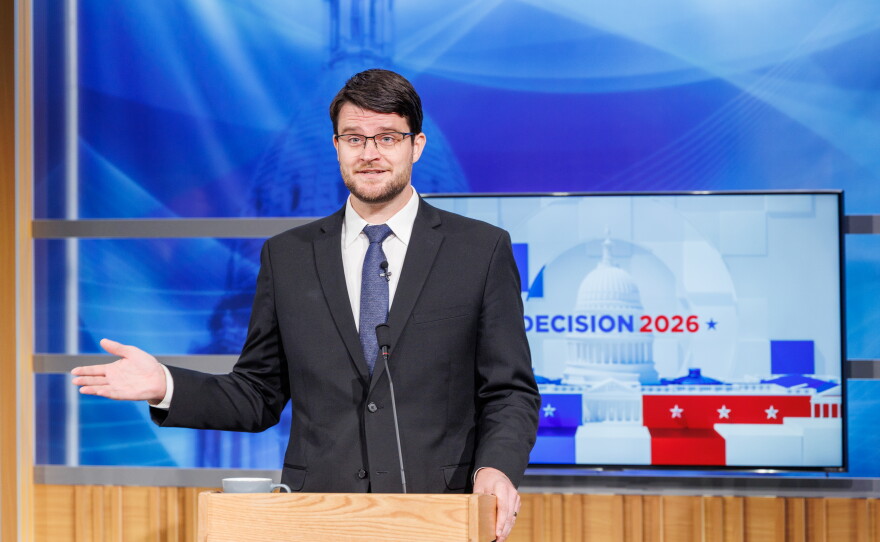
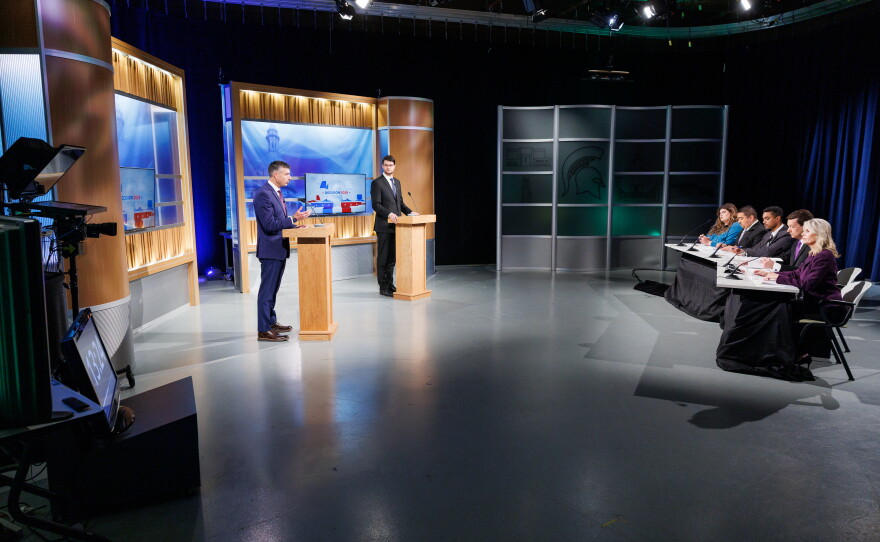
The candidates for Michigan’s 7th Congressional District — Republican incumbent Rep. Tom Barrett and Democratic climate activist William Lawrence — took the debate stage at WKAR studios in East Lansing Tuesday.
It was first time the two have participated in a formal debate.
The candidates talked health care, affordability, data centers and the Iran war.
In his closing statement, Barrett asked voters to give him more time to continue to make the lives of his constituents better.
"When I ran for Congress two years ago, I told you I wanted to work on securing our border, keeping our communities safe and lowering the cost of living. We have more work to do. I recognize that the job isn't done," Barrett said.
Lawrence shared being on the campaign trail has made him more hopeful and that he thinks mid-Michiganders are ready for something new.
"I've met people all across the district, put deeper roots into the community that raised me, connected with old friends, met new friends, and I see that there's so much work we can do together," Lawrence said.
WKAR's Melissa Ingells spoke to All Things Considered host Sophia Saliby, who was on the debate's media panel, about her takeaways from the face-off.
The debate will be broadcast on 90.5 WKAR, WKAR Newstalk and WKAR-TV at 7 p.m. Wednesday.
EJ Nelson contributed to this report.
Interview Transcript
Melissa Ingells: The candidates running for Michigan’s 7th Congressional District went head to head today in a debate hosted by WKAR and News10.
Republican Congressman Tom Barrett and Democrat Will Lawrence traded blows on the economy, foreign conflict and their records as they made their appeal to voters with absentee ballots already out.
WKAR’s All Things Considered host Sophia Saliby was on the media panel for the debate, and she joins me now to break down her takeaways. Hi Sophia.
Saliby: Hi Melissa.
Ingells: What were some of the big themes of the debate?
Saliby: There was a lot of talk about issues, but I think for me, what stuck out was this debate was all about records. Congressman Tom Barrett focused on his record while in office, and also focused on previous social media posts by Lawrence made over the past decade.
Some of those calling for defunding or abolishing police, and others about creating a more open immigration system. These types of messages have appeared in a lot of attack ads about Lawrence. And then Lawrence also talked about Barrett's record as well how he's voted with his party, with Republicans and in line with President Trump's policies.
Ingells: The two candidates clashed a few times during the debate. Tell us about that.
Saliby: Time is scarce in a debate, as you know, for candidates to get their point across. So, a few times during rebuttal periods, they started to kind of talk over each other and get into it a little bit, and I have this one that I had cut during a question about immigration.
So, speaking about starting with Barrett, talking about Lawrence's previous statements on creating kind of a more open borders immigration system.
Tom Barrett: When did you convert on the issue of immigration security and border security?
William Lawrence: These were hypothetical statements.
Barrett: Hypothetical?
Lawrence: From 15 years ago.
Barrett: You're running for Congress. It's not a hypothetical statement.
Lawrence: 15 years ago.
Barrett: So, was it when Joe Biden was president that all of these, all of these things—
Lawrence: You want to talk about old statements? You want to talk about old statements I made because you can't answer—
[crosstalk]
Ingells: Alright. So, did the candidates find anything they actually shared views on?
Saliby: Yeah, none of this part was quite surprising. You know, bringing down costs for Michiganders, supporting local control when it came to data center zoning, ending the war in Iran. These were messaging points that we knew that they kind of had similarities on.
But again, this debate was much more focused on differences and showing themselves to voters as a different candidate, as someone to support.
Ingells: How did they end the debate?
Saliby: So, each candidate got one minute for a closing statement, and Barrett spoke on his accomplishments in Congress, but he asked for voters to give him more time.
Barrett: When I ran for Congress two years ago, I told you I wanted to work on securing our border, keeping our communities safe and lowering the cost of living. We have more work to do. I recognize that the job isn't done.
Saliby: And Lawrence kept on the theme of change that he thinks people are ready for something and someone new.
Lawrence: I've met people all across the district, put deeper roots into the community that raised me, connected with old friends, met new friends, and I see that there's so much work we can do together.
Saliby: This is the only debate for these two candidates on the calendar. Absentee ballots are already out, as you mentioned. So, this is prime time. This is crunch time for them to get their messaging out to voters.
So, I'd expect to see clips from this debate from both candidates as they declare victory in this head to head, on social media, in ads, and probably in a lot more places, so I was really happy to be part of this whole conversation as we're part of the democratic process.
Ingells: Thanks for talking with us. Sophia Saliby is WKAR’s All Things Considered host and was on the media panel for "Decision 2026: Michigan’s 7th District Congressional Debate."
If you missed the debate live, you can find it at wkar.org or on our YouTube page. Or catch it tomorrow at 7 p.m. on 90.5 WKAR, WKAR Newstalk and on WKAR-TV.
