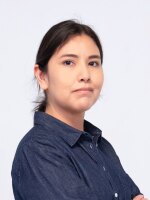
As Election Day approaches, campaigns across Michigan are making their final push to reach voters. WKAR Capitol Correspondent Colin Jackson joined WKAR "Morning Edition" host Melorie Begay to talk about the closing days of the 2026 midterm election cycle, including tensions within the Democratic Party, concerns about antisemitism and Islamophobia from minority groups and the efforts by political leaders to rally support ahead of Tuesday. Click the audio player above to listen.

Interview Transcript:
Melorie Begay: Election Day is in sight as campaigns prepare to make the most of the time they have left to rally voters before Tuesday. Here to talk about the final days of the 2026 midterm election cycle is WKAR Capitol Correspondent Colin Jackson. Thanks for being here, Colin.
Colin Jackson: Good morning, Melorie.
Begay: So, how are you feeling right now?
Jackson: I'm feeling tired, and I'm pretty sure I'm feeling the same way as a lot of Michiganders. This election season has been going on forever. There's been a lot of really interesting things happening. I feel very blessed that I've gotten to cover this. At the same time, I think, like a lot of folks, we're ready for November.
Begay: The end is in sight. As you mentioned, some interesting things have happened throughout the course of this election cycle. One of the things I want to talk about is that there seems to be a rift between Congresswoman Haley Stevens and U.S. Senate nominee Abdul El-Sayed. Now, both are Democrats, and this was a party that wanted to remain unified, or at least that was what they were calling for after the primary. What happened?
Jackson: Over the past week, there were a couple of ads that got released in favor of El-Sayed. One came from the El-Sayed campaign. One came from an outside group called Rebellion PAC, which is not affiliated in any way with the El-Sayed campaign. Both of those angered a lot of folks, especially within the Jewish community. The Rebellion PAC ad was not by the El-Sayed campaign, and the El-Sayed campaign had nothing to do with it. It was a repurposed ad from Cenk Uygur's presidential campaign in 2024. It involves a couple at a grocery store talking about high prices and not being able to afford anything, insinuating that the U.S.'s military aid for Israel is the reason for it. A lot of folks, especially within the Jewish community, saw the ad as offensive and antisemitic.
On the other side of it, there was an El-Sayed campaign ad that featured Tucker Carlson, the conservative commentator, that folks really would have preferred he take down, if not never release in the first place. Stevens was critical of these ads. Stevens says she does still plan on supporting El-Sayed, but her fiancé is saying that he doesn't feel comfortable supporting El-Sayed. Her fiancé is Jewish, and he feels like El-Sayed has not done enough to stop some of the rhetoric that he sees as harmful to Jews.
Begay: How has El-Sayed responded to all of this?
Jackson: The El-Sayed campaign is keeping the same focus it's had throughout the primary. First off, it's saying that especially the grocery store ad, which I think a lot of people focused on, had nothing to do with his campaign. They didn't approve it. They have nothing to do with Rebellion PAC. It was a separate entity that created that ad. But the second thing is the message the campaign sent out to different news outlets said he was focused on making life more affordable for Michiganders and fighting President Trump's agenda. And I think that's refocusing to the Michigan issues that you've seen him emphasize time and time again.
Begay: In a recent update to this story, El-Sayed and Stevens are reportedly going to campaign together this Sunday in Detroit. So there does seem to be some effort to remain unified before Election Day. But I do want to talk about allegations of antisemitism and Islamophobia that we've seen in this election cycle. How have these communities responded to what they're seeing?
Jackson: You've seen a lot of concern, like we've talked about, from the Jewish community about antisemitism. I should say that there is also a letter going around. While there are Jews critical of El-Sayed and supporting Mike Rogers, there was also a significant amount of Jews, over 1,000 people, who have penned a letter supporting El-Sayed's campaign. So, I don't want to make it seem like there's a hard line in the boundaries there.
But at the same time, we're seeing a lot of what I would call Islamophobic attacks against the El-Sayed campaign as well. You've seen images of him in front of 9/11. El-Sayed is American-born, Michigan-born and raised in Michigan. He's the son of Egyptian immigrants, and I think that when you see an Arab man posted in front of 9/11, there's a very specific message those types of advertisements are trying to send.
When you talk with Muslim voters, when you talk with Jewish voters, everyone feels just a little bit unsafe right now. I think seeing these communities feel unsafe, you're seeing them try to figure out how to use their ballot in the best way to keep them and their communities safe.
Begay: Now, there's only a few days left before Election Day, and Michigan has seen a lot of big names come into the state to rally support for several candidates. We also have local political figures calling for support, including Gov. Gretchen Whitmer and former Gov. Rick Snyder. What are they telling their supporters?
Jackson: Both of those folks are campaigning in some of these state legislative races. I was with the governor in West Michigan on Monday. She was campaigning for State Rep. Carol Glanville, who's trying to flip a state Senate seat blue. It's currently held by Republican Sen. Mark Huizenga. On the other side of things, Rick Snyder was campaigning in that same district.
From the Democratic side, you're seeing a lot of momentum. They're saying they need to win another trifecta so they can go to work and help Michiganders lower costs, take care of people, and lower taxes. On the Republican side, they're saying affordability is also an issue for them, and that government regulation is becoming a burden on Michigan families. They're saying candidates need to focus on local issues instead of the national landscape and some of these national conversations. Bring it back to Michigan. Bring it back to community safety. Bring it back to lowering taxes. Bring it back to education and some of the things that really affect people's lives here.
Begay: All right, Colin Jackson is WKAR's Capitol Correspondent. Thanks for being here, Colin.
Jackson: Thanks for having me.
This conversation has been edited for clarity and conciseness.