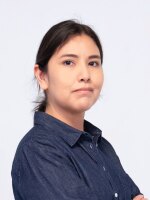
Between the Devil and the Deep Blue Sea: A Veterans memoir follows the life of author and poet Khadijah Queen as she enlists in the U.S. Navy in search of a better life.
The memoir is featured on this year's Library of Michigan's notable books list.
Queen joins the military with the goal of finishing her education, a dream put hold after her mother moved her family from sunny Los Angeles to the cold Detroit suburb of Inkster, Michigan.
Her mother makes the decision to relocate the family in an effort to help Queen's sister, who has a drug addiction and can longer care for her five children.
"We basically uprooted our whole lives for the kids, and I had to leave college and everything,” Queen said. "It was very, very traumatic for me.”
Throughout the memoir, Queen encounters racism and sexism during her service, but she remains steadfast in her goal to finish school when she leaves the Navy.
Often, she turns to writing, reading and memories of her resilience while growing up in 1980s L.A. to get her through difficult situations.
In the chapter titled “P-Days,” she describes losing her security clearance during boot camp after telling a naval investigator she believed it was wrong to kill innocent people and destroy the Earth.
Queen said this moment, which was one of her first run ins with censorship, shaped her writing because she can’t help but speak her mind.
"I'm from people who are outspoken, who have endured quite a lot, who have helped to build this country, and we deserve to have a say.” Queen said. “We deserve to participate in getting our education...and to tell our stories, our authentic stories, our complicated and diverse stories.”
She said she hopes her readers can see there are many stories that can teach them about their capacity for empowerment.
"I would love for people to take away the ability to understand the capaciousness of the human experience and to not limit themselves to what we're told is the singular definition of a thing or an experience or a population," Queen said.

Interview Highlights:
On what inspired her to write the memoir:
"That's a funny story. I didn't want to write it! I was in the first year of my MFA studies, and I wanted to talk about my family history, actually, how my family came to Michigan from the south. And I was telling that to my mentor, and she was like, weren't you just in the Navy? Because I'd just gotten out a couple years before...so shout out to her, because without her, this book would not exist."
On what the move from L.A. to Michigan was like:
"We basically uprooted our whole lives for [her sister's] kids, and I had to leave college and everything. It was...very traumatic for me in the times we had visited Michigan..., it was just very different from California. And even though I love my family and there's nobody realer than somebody from Michigan, and they're such strong people, I don't know, I missed the sunlight."
On what she hopes people take away from her memoir:
"I would love for people to take away the ability to understand the capaciousness of the human experience and to not limit themselves to what we're told is the singular definition of a thing or an experience or a population."
Interview Transcript:
Melorie Begay: The memoir Between the Devil and the Deep Blue Sea follows the life of author and poet Khadijah queen as she enlists in the Navy to escape life in Inkster. Throughout her service, she endures racism and sexism while staying focused on getting a degree. She joins me now to talk about her book. Thanks for being here, Khadijah.
Kadijah Queen: Thank you for having me.
Begay: So, what inspired you to write this memoir?
Queen: You know, that's a funny story. I didn't want to write it! I was in the first year of my MFA studies, and I wanted to talk about my family history, actually, how my family came to Michigan from the south.
And I was telling that to my mentor, and she was like, weren't you just in the Navy? Because I'd just gotten out a couple years before. My mentor was Valerie Boyd, who's a journalist, and she wrote the definitive biography of Zora Neale Hurston. It's called Wrapped in Rainbows. So, shout out to her, because without her, this book would not exist, and I got about 80 pages down, fresh out of the Navy, because she wanted to hear that story.
Begay: So, you spent most of your life living in LA, but you were forced to move because your mom wanted to help with your sister's kids who lived in Detroit. What was that adjustment like?
Queen: Our life was pretty peripatetic, like, we moved around so much. But my family is from Inkster on my mom's side, they came from the South to Inkster in 1920, and her grandmother had seven sons.
They built the houses that they lived in. My grandfather helped to lay Middle Belt Road, like that's how from Inkster, my family is. And we got to Detroit, where my older sister was, because she was using drugs and she had five kids, and the neighbors were calling because the kids were, you know, not being cared for properly.
So, we basically uprooted our whole lives for the kids, and I had to leave college and everything. It was, it was very, very traumatic for me in the times we had visited Michigan. You know, it was just very different from California. And even though I love my family and there's nobody realer than somebody from Michigan, and they're such strong people, I don't know. I missed the sunlight. I missed having cool things to do, and I just didn't feel like— I didn't feel like I fit in.
Begay: And we in Michigan also miss the sunlight a lot of the time.
Queen: Yes!
Begay: I want to go over a chapter in your book called “P-Days,” and it's during boot camp. You're doing an interview with a naval investigator serviceman, and during this interview, you mention that you think it's wrong to kill innocent people and destroy the Earth, and you get reprimanded for that, right? You lose your clearance. It gets bumped down, so that means you can't pursue certain jobs in the Navy. And this kind of becomes a theme throughout the book, where you get reprimanded for speaking your mind, whether it's against racism or sexism. How do you think these experiences shaped who you are as a writer?
Queen: That's such a great question, and I think I, like, I can't help speaking my mind. It still gets me in trouble sometimes. And I think what I learned from writing the memoir is to remember who I am.
I'm from people who are outspoken, who have endured quite a lot, who have helped to build this country, and we deserve to have a say, and we deserve to participate in getting our education, for example, and to tell our stories, our authentic stories, our complicated and diverse stories.
And the human experience is something that cannot be reduced, right? It's expansive. Even the simplest-seeming girl from California uprooted to Michigan, from a family, a poor family, the first in her family to go to college, like, that holds complexity and nuance when you look at it in the larger scheme of things. My mother's story is complicated, you know. Her grandmother's story is complicated, you know. So, I think we have the invitation to allow for complexity to be an invitation to understand one another, and if we suppress our voices, then we don't get that opportunity, and what a loss that would be.
Begay: What do you hope people take away from your book?
Queen: I hope that they can take away that there are so many stories that we don't know that we could be invited into and learn about our own capacity for empowerment. Life and connection and history, it was important to me to bring in those stories about historical women at sea, so that I wouldn't feel so by myself.
You know, when we think about sailors, we don't think of someone like me, right? But there are plenty of women sailors, and there always have been women at sea, and I think I would love for people to take away the ability to understand the capaciousness of the human experience and to not limit themselves to what we're told is the singular definition of a thing or an experience or a population.
Begay: Khadijah Queen is the author of Between the Devil and the Deep Blue Sea: A Veterans Memoir. Thank you for being here.
Queen: Thank you, Melorie. I really appreciate it.
This conversation has been edited for clarity and conciseness.
Correction: An earlier headline misspelled Khadijah Queen’s name.