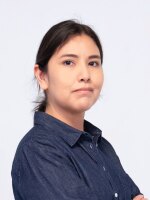
For many people with special needs, inclusive spaces can be hard to find. But a summer camp at Michigan State University is changing that by providing people with disabilities a place to play music, explore and find community. The camp is the focus of the award-winning documentary film "Camp RicStar" airing on WKAR-TV this Christmas Eve.
The Eric 'RicStar' Winter Music Therapy Camp is named in honor of Dick and Judy Winter's late son Eric Winter.
"Eric had a gift for music,” Judy said. “He was born with cerebral palsy, and we were told all the things Eric would never do, and we decided to raise him as a child of value and a child that could accomplish just about anything we gave him the opportunity to."
Judy said Eric started taking music classes after she and Dick noticed his gift for music, something they saw when he was 3 years old.
Eric's talent and love for music was what inspired Dick and Judy to start the camp in 2003 following the unexpected death of Eric at age 12. They co-founded the camp with Cindy Edgerton, the director of Music Therapy Clinical Services at MSU's Community Music School.
"Eric always wanted to go to summer camp, and at that time, the camps did not accept kids who had his kind of disability. There's more available today, but at the time, it was virtually unheard of. And so, we said, what would Eric want to do? He would want to play music all day long. He would want to make sure that no one was excluded, which was really important. And we wanted to make sure that everyone could afford to come," Judy said.
The camp has since become a place where people with disabilities can participate in music classes and explore their musical talents without barriers. Eric's story and the success of the camp and its campers can be seen in the film "Camp RicStar."
"It's very rewarding to us to see the camp," Dick Winter said. "To see what the camp does for individuals that are participating in it, the joy that we can see in their faces and their movements, it’s just incredible. And then, along with the music therapists and the volunteers that are able to participate in this...what was really important for us, was to see the families and the caregivers that are involved, give them a little bit of relief too."
Since premiering last year, the film has won several festival awards including the 2024 Capital City Film Festival Best Feature Documentary and the 2024 Twin Cities Film Fest Best Documentary.
“It is a perception-busting movie," Judy said. "That's what we'd hoped people would see. We hoped it would add to the disability rights narrative as to what's possible ... we're presenting these people front and center. They are the stars of the showcase. They are the stars of the film. We don't hide them. We don't talk for them. We put them there in all their glory and make people look so they don't look away from disability.”
"Camp RicStar" airs Wednesday, Dec. 24 at 2 p.m. on WKAR-TV and is available on the PBS app.

Interview Highlights
On why Dick and Judy decided to start the Eric 'RicStar' Winter Music Therapy Camp
"Eric always wanted to go to summer camp, and at that time, the camps did not accept kids who had his kind of disability. There's more available today, but at the time, it was virtually unheard of. And so, we said, what would Eric want to do? He would want to play music all day long. He would want to make sure that no one was excluded, which was really important. And we wanted to make sure that everyone could afford to come"Judy Winter
On seeing the documentary film
"It's very rewarding to us to see the camp...to see what the camp does for individuals that are participating in it, the joy that we can see in their faces and their movements, it’s just incredible. And then, along with the music therapists and the volunteers that are able to participate in this ... what was really important for us, was to see the families and the caregivers that are involved, give them a little bit of relief too."Dick Winter
On the film's reception since premiering in 2024
“It is a perception-busting movie ... that's what we'd hoped people would see. We hoped it would add to the disability rights narrative as to what's possible ... we're presenting these people front and center. They are the stars of the showcase. They are the stars of the film. We don't hide them. We don't talk for them. We put them there in all their glory and make people look so they don't look away from disability"Judy Winter
Interview Transcript
Melorie Begay: For many people with special needs, inclusive spaces can be hard to find. But a summer camp at Michigan State University is giving campers a place to explore their creativity and find belonging.
Dick and Judy Winter founded the Eric ‘RicStar’ Winter Music Therapy Camp in 2003, a camp honoring their late son, Eric, who had cerebral palsy. The camp’s impact is the focus of a new documentary airing on WKAR-TV. I'm here with Dick and Judy about the film. Thanks for being here.
Judy Winter: Thanks for having us.
Begay: The name of the film is "Camp RicStar," and it's a mash up of Eric and rock star. Can you tell us more about Eric and how the name came to be?
Judy: Well, Eric had a gift for music. He was born with cerebral palsy, and we were told all the things Eric would never do, and we decided to raise him as a child of value and a child that could accomplish just about anything we gave him the opportunity to do. And one of the things we discovered during that is we put him in music classes because he seemed to show a real gift for music. And so, from that beginning, I think it was age three, we discovered that Eric had a great gift for music, and that became a very important theme throughout his life.
Dick Winter: Yeah, after he passed away in 2003 very quickly, we wanted to honor Eric, and we thought a way of doing that was to start a camp at Michigan State University for individuals with disabilities that enjoyed music and could enjoy group therapy, music therapy in a group session. And we started very shortly after Eric passed away, and it's continued to thrive, been going for 23 years now.
Begay: In the film, we learn that Eric composed some music of his own, and both his talent and love of music, as you mentioned, were part of what drove you both to start the camp. What does it feel like to be able to see the impact the camp has on others with special needs?
Judy: You know, it's really one of those things. It's very difficult to put into words. I mean, we've tried many times, but there is something incredibly beautiful about knowing we were devastated when our son was born. We put everything into him. You know, so much love and so much opportunity, and he was such a joy in light of the challenges that he had. We knew we had to honor him in the way that was worthy of his life, which he lived joyfully.
So, when he died, and we were really thrown off course, because it was very unexpected and very sudden at age 12. We said, what would Eric want us to do? And music had been such an important part of his life. We did a lot of that through the obviously, MSU Community Music School and music therapy with Cindy Edgerton, who is also one of the co-founders of the camp, and she worked with him for years. And we knew that there had to be something there that would have to do with music.
Eric always wanted to go to summer camp, and at that time, the camps did not accept kids who had his kind of disability. There's more available today, but at the time, it was virtually unheard of. And so, we said, what would Eric want to do? He would want to play music all day long. He would want to make sure that no one was excluded, which was really important. And we wanted to make sure that everyone could afford to come. So we would never turn anyone away because of financial need, because that really makes it so difficult for these families, who often have so many expenses to be able to take part in something like this.
Dick: I think it's very rewarding to us to see camp, but also now the film to honor [the] camp, but to see what the camp does for individuals that are participating in it. The joy that we can see in their faces and their movements, it’s just incredible. And then, along with the music therapists and the volunteers that are able to participate in this, and then also, what was really important for us was to see the families and the caregivers that are involved give them a little bit of relief too.
Begay: And the film premiered last year and has since gone on to win several film festival awards. How does it feel to see Eric and the camp story reach so many people?
Judy: We knew we had a good film. We knew we had a groundbreaking film. We knew a lot of people would want to see it, but then you put your baby out there and tell your story, and you see what the response is. Response has been incredible wherever we have gone. We have won more than one best documentary award, which is very gratifying for first-time film filmmakers, which some of us were.
Everywhere we showed the film, everyone came up and said to us, this film needs to be seen by everybody. It is a perception-busting movie, which we agree with. That's what we'd hoped people would see. We hoped it would add to the disability rights narrative as to what's possible for the, you know, we're presenting these people front and center. They are the stars of the showcase. They are the stars of the film. We don't hide them. We don't talk for them. We put them there in all their glory and make people look so they don't look away from disability.
Begay: What do you hope people take away from the film?
Dick: I think it's a series of perception busting is that we'd like to see all individuals treated as humans equally what no matter what their abilities or disabilities are. I think we could get across that message very well in the film by putting the campers to the forefront, letting them speak where they can, letting them participate, where they can, letting them perform, as they can in a showcase.
Begay: Dick and Judy Winter founded the Eric 'RicStar' Winter Music Therapy Camp. Their film "Camp RicStar" will air on WKAR-TV Dec. 24 at 2 p.m. Thanks you both for being here.
Judy: Thank you for having us.
Dick: Thank you, Melorie.
This conversation has been edited for clarity and conciseness.