

Michigan residents can help researchers and conservation efforts by counting birds they see at backyard feeders or on trails this winter.
The Department of Natural Resources wants people to participate in Project FeederWatch, a November through April survey of North American birds headed by the Cornell Lab of Ornithology and Birds Canada.
Citizen scientists choose a spot to watch birds, count the ones that visit and submit that number to a database. People can choose how often to report information—whether it’s a single day at a backyard feeder or a diligent diary kept through the entire season.
“They're expecting folks to be watching things outside their kitchen windows, and so they provide educational materials about how to identify common species,” said DNR bird biologist Karen Cleveland.
Anyone can participate. Cleveland said it’s a great winter activity for kids.
“It's a great thing to be able to say, 'Hey, we've got this little information sheet with pictures of the birds. Sit at the window and look at the bird feeder and take note of which of these birds we're seeing out there,'” she said. “Learn a little bit more about the birds that are actually in your yard. These are your neighbors for part of the year. It's good to know a little bit more about them.”
Researchers use this data to cover gaps in bird biology that Cleveland said haven't gotten much attention. She said most studies about birds have been done during the breeding season, which is spring, summer and early fall, when the weather is nicer.
“In the wintertime, there has not been anywhere near as much data collected about what birds are in what areas and what types of habitats they are using,” Cleveland said.
Cleveland said the DNR would love to see more participation in Michigan, so they can learn more about what birds need during winter and make better decisions for their long-term health.
She said birdwatching is an accessible hobby for nature lovers.
"People don’t need a lot of gear to get started. All you really need is either your eyes or your ears,” she said.
There’s a lot of free tools for birdwatchers, including the Merlin Bird ID app from Cornell, which can identify birds from their songs or images.
Those looking to level up can buy binoculars and field guides.
Despite the cold temperatures and dormant forests, Cleveland said it’s a great time of year for birders to go out to state game areas and parks.
“The hunting seasons are winding down. There's not as much activity out there. You're really going to be out there by yourself,” Cleveland said.
“If you're looking for that peace and quiet, getting out to your nearest state game area and hiking out on the trails and then just stopping and listening and waiting to hear those bird songs start to start up again in the woods is very relaxing."


Birder Eric Berling agrees.
“For some birders, the winter might seem bleak. It's a little bit less vibrant outside with leaves and foliage, and maybe not quite the diversity of birds we're used to during spring migration,” Berling said. “But there really are a lot of wonderful birds out there, and the winter is a great time to see them through your own windows because they're often looking to come to feeders.”
Berling is a STEAM educator at the East Lansing Public Library. He runs the library’s Birders Club, which he started about two years ago.
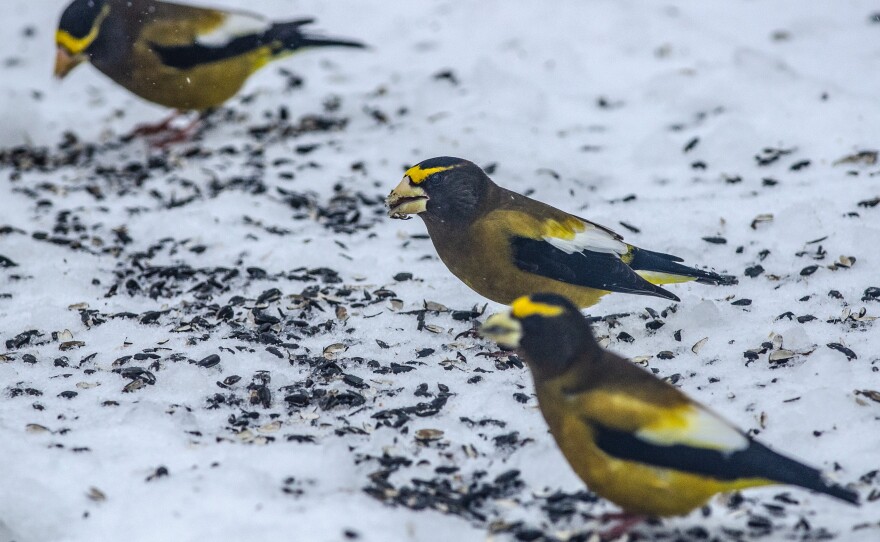
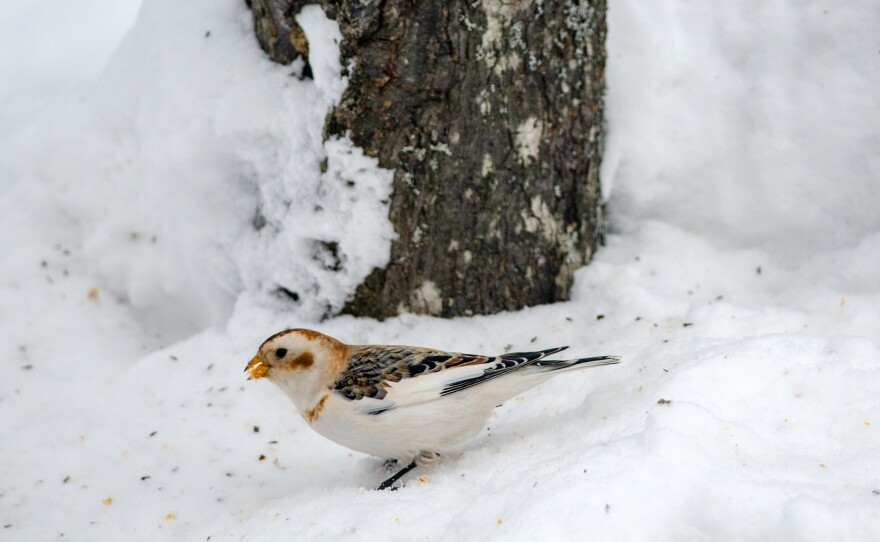
“We might even see some special birds during the wintertime here that we wouldn't normally see during the rest of the year,” Berling said. “Be on the lookout for things like the beautiful yellow evening grosbeaks, purple finches, or red-breasted nuthatches, perhaps even some snow buntings or some other cool birds like that.”
Berling said water fowl—like ducks and geese—“hang out through the winter.” They might be tricky to find, though, because they’ll be sticking to open water, not frozen-over ponds.
For those not wanting to brave the cold outdoors, feeder displays are a good option. Berling said a lot of birds migrating from Canada eat seeds, so they’ll be enticed by bird feeders—including the one at the East Lansing Public Library.
“Dozens of birds come through there usually in any given hour. It's a really big hot spot,” he said. “We share the woods behind our building with East Lansing High School, so a lot of birds call that area home, and they'll come visit those feeders. Anybody's welcome to come in and hang out and watch some birds while they work or relax.”
Berling wasn’t a birder when he started the club a few years ago. It was a response to the community asking for related programs.
But now, he said, birding is his favorite hobby.

He’s not alone. According to the U.S. Fish and Wildlife Service, 96 million Americans, or 37% of the population, birdwatch.
Berling said birding is a “great chance to scaffold up all kinds of neat things about the natural world.”
“Some of the birds that we have here just for a couple days in the spring might be flying hundreds, if not thousands of miles from somewhere they winter in South America up to some northern tip of the Boreal Forest [in Canada],” Berling said. “We think of us as these connection points along the way. It shows the interconnectedness of the natural world and makes us think about our place within that and our responsibilities to these creatures.”
Nick Segerson is the president of Capital Area Audubon, a chapter of Michigan Audubon. These groups connect people and birds to protect the wilderness.
Segerson said Michigan’s predicted to receive an unusual amount of finch visitors.
According to the Finch Research Network, this winter could be the biggest flight year for finches from Eastern Canada since 2020.
That’s because food sources including seeds from trees like white spruce are lacking this year
“A lot of these birds that would typically stay further north if they had lots of food are coming down south, and many of them visit feeders,” Segerson said. “There’s a good chance if you keep your feeder stocked that something very interesting might show up.”


Segerson said programs like Project FeederWatch are good examples of how people can engage with research, but apps like Merlin, eBird and iNaturalist help scientists while connecting birders with the wider birdwatching community.
“You can track what birds you’re seeing,” Segerson said. “That can help scientists because they can know where people are seeing birds throughout the year and better understand where they’re moving and what situations are good for them.”
iNaturalist is a good tool for those looking to get into wildlife photography, Segerson said. On the app, people upload photos of plants and animals, and others help identify the species.
For those looking to spot a specific bird species, eBird can assist. The app shows a map of where people have seen certain species.
“These are really great ways to engage in the hobby of birdwatching and get a better appreciation for wildlife,” Segerson said. “It also helps connect you to the community of people with the same interests and skill level as you.”


